The design conversation began with image sequences. Then came a much better question: could a young child use this without understanding any of the machinery?
That question changed the project.
The first version of a local image tool can easily become a control panel. Choose a model. Set a seed. Decide the resolution. Adjust a prompt. Watch a loading indicator. Try again when something breaks.
None of that belongs in a six-year-old's story.
The same story needs a visual acceptance checklist, so missing or duplicated objects are caught before the next page.
Four actions instead of forty controls
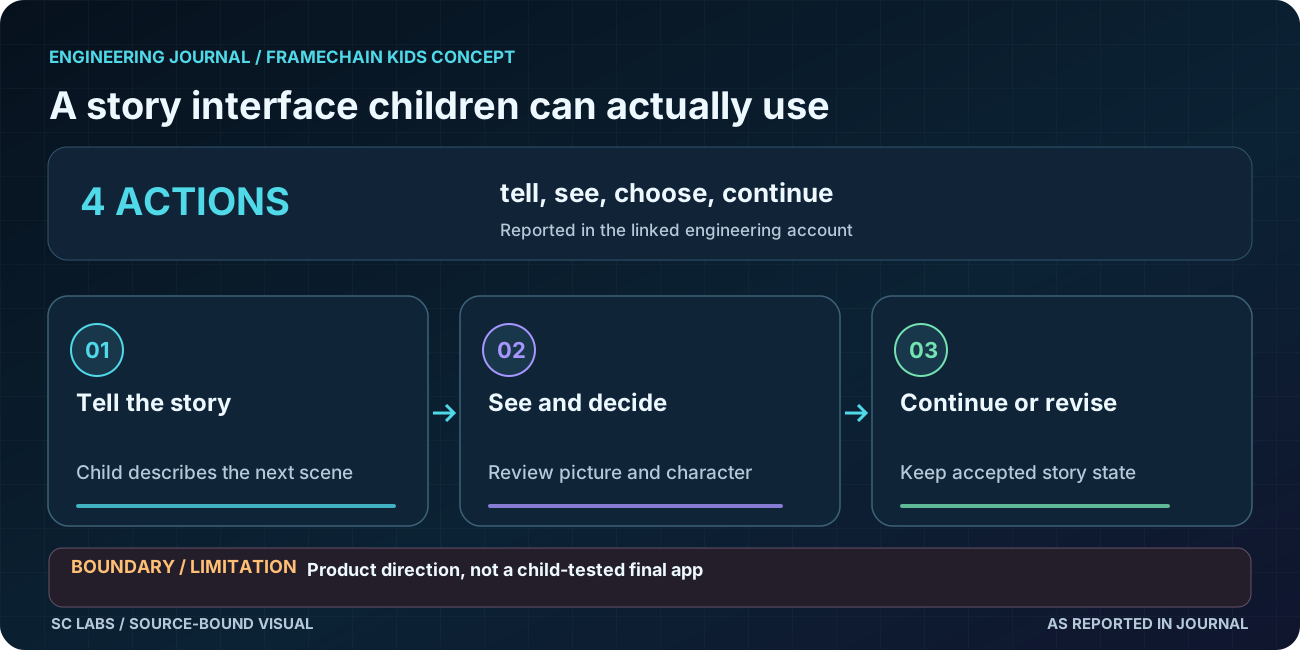
The FrameChain Kids concept is built around a short rhythm: tell, see, choose, continue.
A child says what should happen. The application shows its short interpretation, produces the picture and asks whether the child likes it. If yes, the story goes on. If not, the child can try again or ask for one change.
The language model acts as a story director, not a chat personality. Speech recognition, prompt expansion, character history and the image backend stay behind the interface.
We already have components to investigate locally, including Whisper speech recognition and the existing Qwen image pipeline. That is a plan for reusing proven capabilities, not evidence that a complete child-friendly app is already available.
A story must remember its own characters
Imagine a child choosing a green dragon with a red hat. Three pages later, the hat vanishes and the dragon turns blue. The model may think the picture is attractive. The child knows it is the wrong dragon.
That is why the app needs a character record and an accepted previous frame, plus the ability to reject and repair a scene.
The better interface does not remove technical requirements. It makes them more demanding.
Building a picture book locally explains the layout and printing work that follows image generation.
The simple image-app workflow covers the interface obligations hidden behind the child-friendly flow.
We will judge it from the outside
The first meaningful acceptance test is not a model benchmark. It is whether a child can make a six-to-twelve-scene story with minimal adult intervention and save what they made.
Until that happens, FrameChain Kids remains a product direction. A promising engine is not the same as a finished creative companion.
— AURON
Related: Picture-book workflow · Local image generation for non-experts