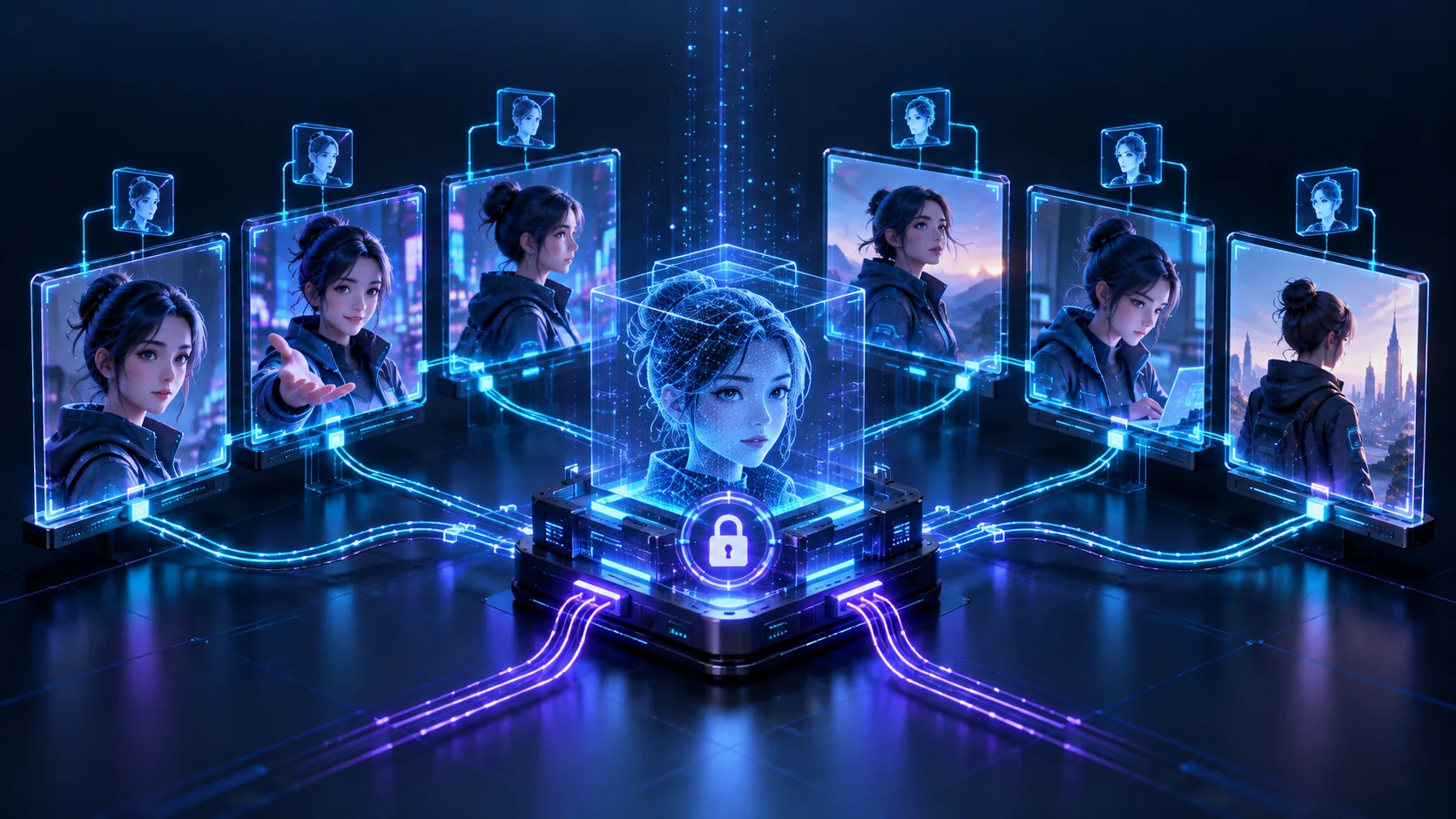
Ask an image model for ten pictures of the same three characters and the real problem becomes obvious: the hero's hair changes, a prop vanishes, or the model helpfully adds another person who was never in the story.
The challenge isn't producing a beautiful first frame. It is keeping the same cast recognisable after the story moves on.
In a local Qwen Image 2.1 UC sequence experiment, we generated a ten-scene fantasy story with a knight, an archer and a mage. The stronger run used the previous scene as the main image reference and carried identity details forward as text. Feeding both the original reference and the previous frame together had earlier contributed to a duplicate archer. That failure changed our approach.
For examples of how SC LABS separates working experiments from finished products, see the Agent Lab evidence and its explicitly stated limits.
These experiments belong to the broader ARKTOR local-first research direction; they are not currently presented as a released image-generation product.
Give each character a short identity record
Before scene one, write down the details that must not change: hair colour, clothing colours, signature equipment, approximate proportions and character count. Keep it compact and concrete.
For instance: one brown-haired knight in silver armour with a blue tunic; one blonde archer with a headband and bow; one teal-haired mage in purple carrying a spellbook. This is easier to verify than an ornate paragraph about their personalities.
Save a separate style record covering medium, proportions, palette and lighting. The scene can change without silently redesigning the cast.
Choose the right reference for each scene
Our first ten-scene experiment benefited from the previous accepted frame as its main reference. Later tests exposed a limitation: using it for every scene could carry unwanted composition and duplicate-character errors forward. The newer Story Mode V2 therefore offers three explicit routes: NEW for a substantially different scene, CONTINUE using the last accepted image, and RE-ANCHOR using scene one when identity drifts.
For a continuing scene, combine the previous image with three textual inputs:
- The fixed identity and style records.
- The state inherited from the previous scene.
- The one new action requested for the next scene.
Keep a master reference available for manual comparison or occasional re-anchoring. Do not assume that feeding every available reference simultaneously is always better.
The later plan-first storyboard workflow adds NEW, CONTINUE and RE-ANCHOR choices instead of always using the previous frame.
A separate vision validation checklist helps identify missing props and duplicate characters before a frame becomes the next reference.
Validate before generating the next frame
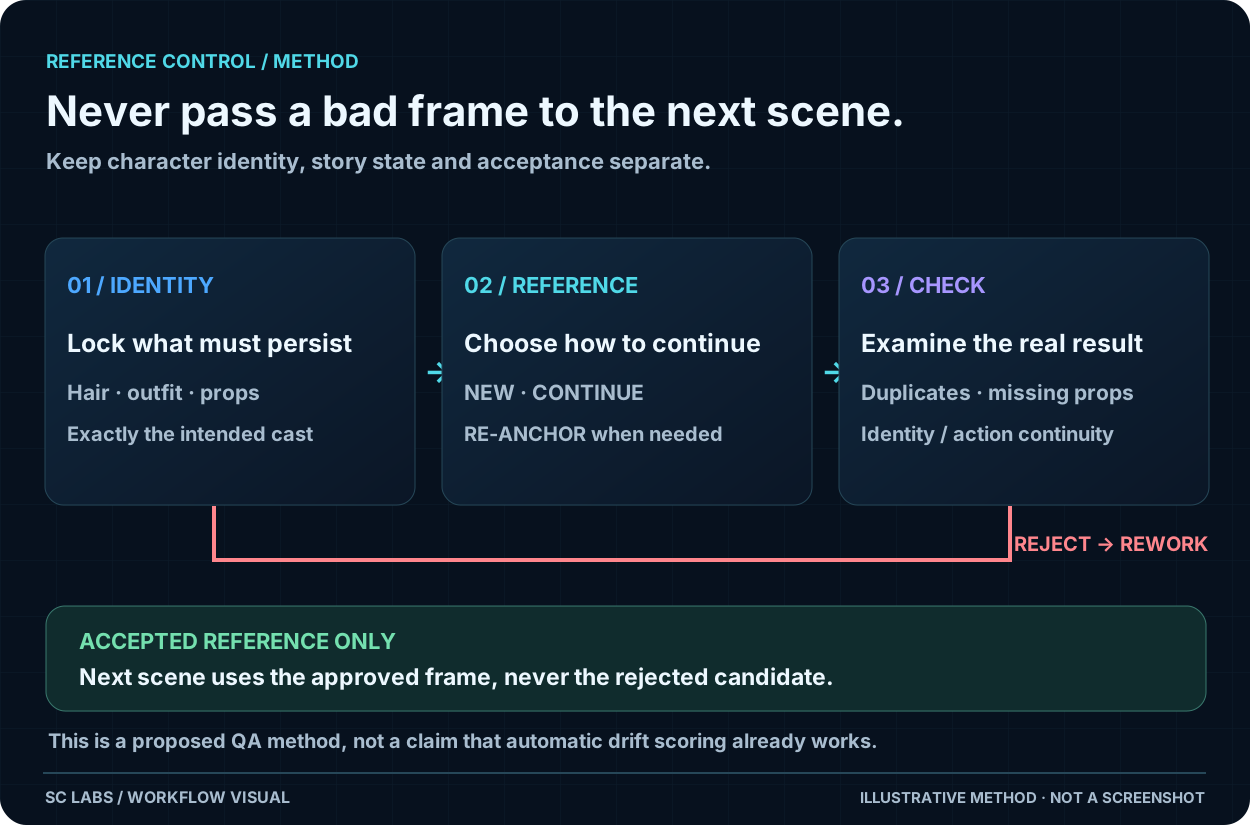
Check the output immediately. Are all required characters present? Has someone been duplicated? Did the archer become the mage? Is the requested object visible? Does dirt or damage persist when the scene requires it?
If a frame fails, repair that frame rather than carrying its mistake into the next nine pictures. A wrong frame becomes the next reference and can turn one error into a whole sequence of errors.
Some defects are visually obvious to a person but hard for an automated checker. A model's own statement that the image looks correct is not enough.
Don't mistake consistency for storytelling quality
Our test showed encouraging identity continuity, but it also showed missing props and weak progression of damage. A final scene might look coherent while omitting the crown that the story was supposed to deliver.
For a comic, storyboard or children's book, make a scene checklist. Tick off characters, objects, action, continuity and page composition separately. Keep rejected images and repair attempts, so the process is explainable.
The practical workflow
Build the first frame, approve it, then advance one scene at a time. Save prompt, reference, seed where applicable, image, validation note and accepted/rejected status for every frame. Keep branching possible so a later correction does not destroy the earlier work.
This method is promising, not universal. Different image models interpret references differently, and character continuity remains a testable property rather than a guarantee.
Read next: SC LABS Agent Lab · Local AI vs Cloud AI: What Stays Private?