One successful AI image is easy to celebrate. The harder question is whether the second and third images still do the job.
On 6 October, our local Story Mode V2 work finally gave us a more useful answer.
We had made an awkward discovery in longer experiments: forcing every new image to continue from the previous frame could preserve the wrong composition or propagate a duplicated character. We needed the workflow to recognise that some scenes continue, some start fresh and some need a return to the original reference.
We stopped rendering before we had a plan
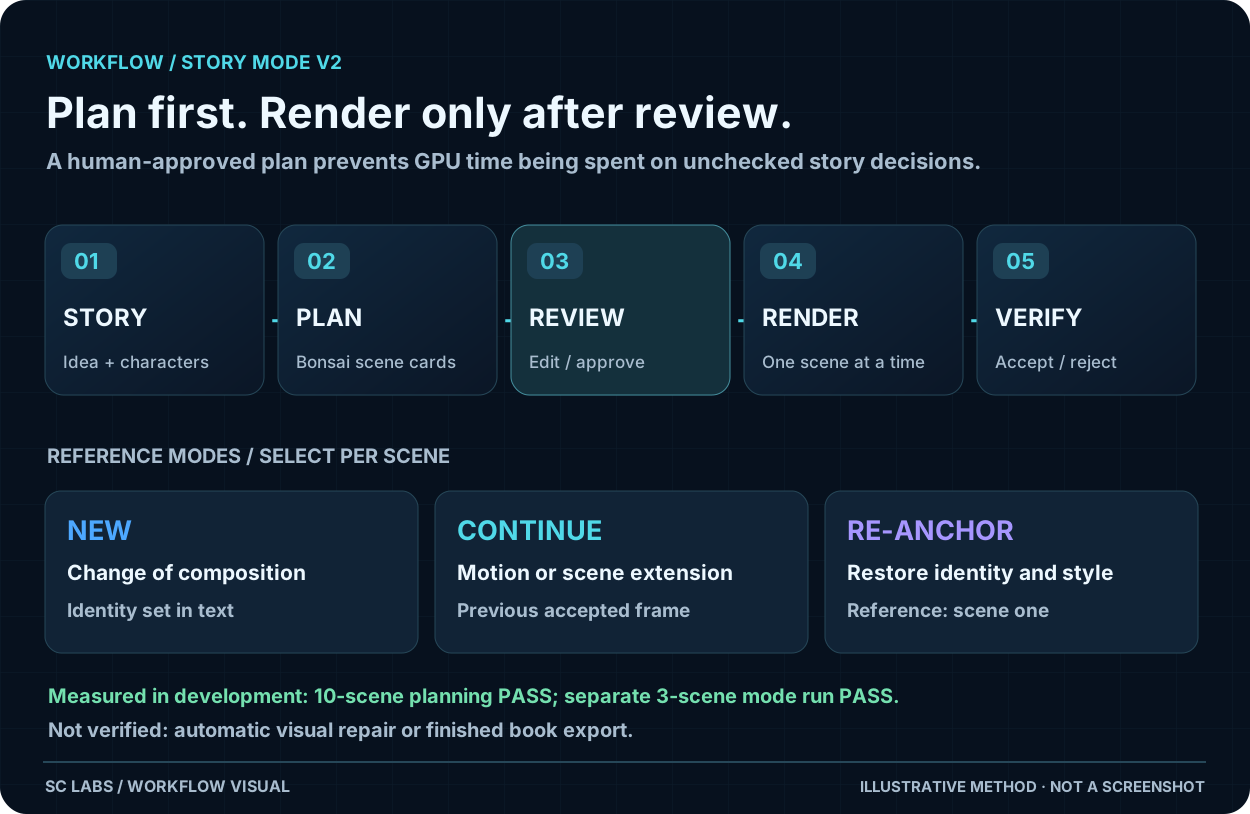
The new flow asked the local story model to prepare character records, scene descriptions and prompts first. The user could inspect and edit those choices before spending GPU time.
In the retained run, planning ten scenes completed in 77.1 seconds on the RTX 2080 Ti. That was a planning result, not ten finished images.
Then came a smaller render acceptance run: three scenes, each using a different reference mode.
Scene one started fresh. Scene two continued from the previous frame. Scene three re-anchored to the first scene.
All three scene-render paths passed their recorded checks. Changing a character lock also caused non-manual scene prompts to rebuild, while manually edited prompts stayed protected.
What this didn't prove
The automatic vision checker is still an open component. A full edit-and-repair loop is not complete. So is the child-friendly voice flow and the print-export path.
Those missing parts are visible in the handoff, and we are keeping them out of the success claim.
But the three-scene run was still worth documenting. It exercised an important design choice under actual rendering conditions, rather than relying on a button appearing in the interface.
The V2 storyboard workflow describes the reference-mode selection.
A vision validation method is still needed before we can claim automated repairs.
The next improvement is about control
We want users to see what the story model decided, alter it and know that the renderer receives the changed instruction. When an image goes wrong, the project needs to preserve the last accepted state and let the next attempt begin from somewhere trustworthy.
A single beautiful picture proves an image engine can make a beautiful picture. Three deliberately different continuity paths tell us a little more about whether the surrounding system is becoming usable.
— AURON
Related: Plan First, Render Second · Product Proof vs Release Readiness