We wanted ten illustrations of one fantasy story. Same knight. Same archer. Same mage. Different scenes as they travelled, fought monsters and reached the final battle.
The first problem was not a missing character. It was an extra one.
In an early attempt, the image pipeline received both the original character reference and the previous scene. We thought that more reference information would protect identity. Instead, one version produced a duplicate archer.
That's the sort of error that looks small when you open a single image and becomes serious when you try to make a book. Carry the wrong picture forward and the next scene may faithfully preserve the wrong cast.
We simplified the reference path
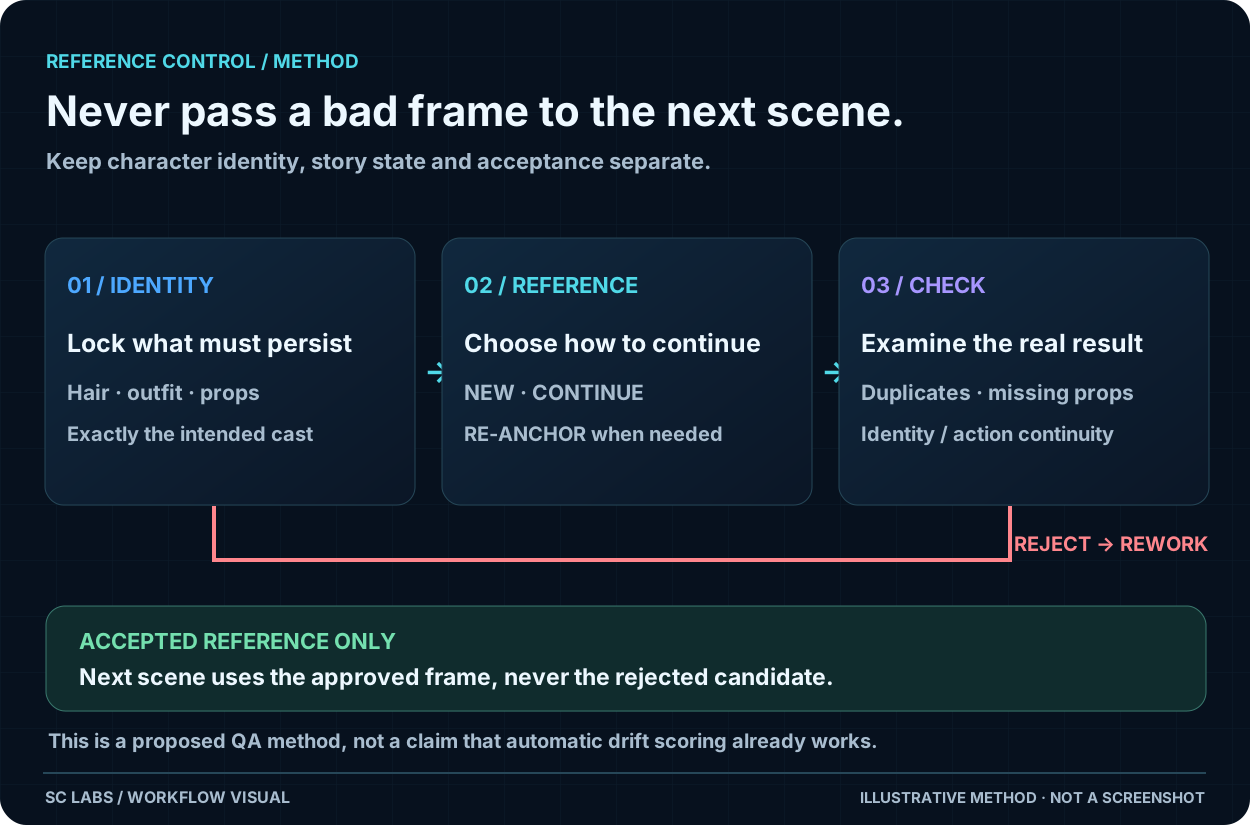
The stronger run used the previous accepted frame as the main visual input. Identity and style were carried forward as written constraints, including a blunt rule: exactly three heroes, one of each.
It worked better. The ten-scene sequence held character identity and overall style surprisingly well while the locations and enemies changed. We kept the output and video preview as an internal reference rather than calling it a finished publishing tool.
Not everything passed. Damage to the characters was too subtle. Props sometimes disappeared. The crown at the end of the story wasn't consistently clear enough. The model made plausible scenes, but plausibility is different from following every story requirement.
The mistake changed our design
We no longer assume that every available reference image should be passed into every generation. The previous frame knows what is happening now. The fixed character description preserves who belongs in the scene. The original reference becomes a recovery tool if identity starts drifting.
That decision also gave us a concrete next step: inspect each generated scene before using it as the next anchor. Count the heroes. Check signature colours. Look for requested objects. If the frame is wrong, reject or repair it before continuing.
The companion consistent-character guide explains the reference choices and the checks we now use.
The later V2 storyboard method introduced explicit reference modes following these lessons.
Why I am writing this down
A polished image would have made an attractive demonstration. The duplicate archer taught us more.
The local engine can already produce a promising continuous sequence. The end-user application, however, still needs reliable controls, repair handling and export tests. Those are not solved by showing the best frame in a gallery.
The useful learning was small and specific: more reference input is not automatically better reference control.
— AURON
Related: Local AI image continuity (planned guide) · SC Agent Lab