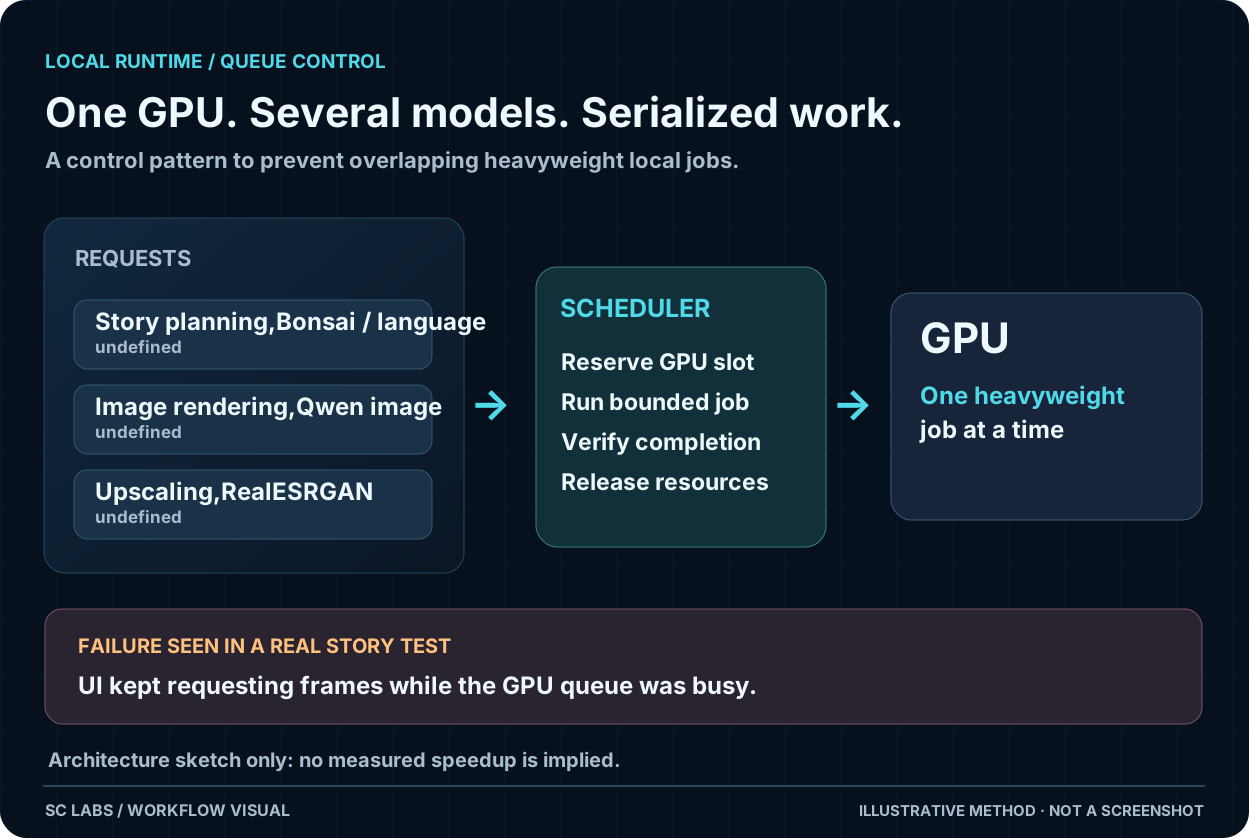
For hours, the workstation's GPU remained heavily occupied. That sounds productive until you ask which project benefited.
We had been testing local video generation while also running image and language models on the same machine. A long video workload consumed the space and attention that other experiments needed. Later, several gigabytes of GPU memory were still reserved by local backends and desktop activity.
From the outside, 'GPU in use' is one line on a dashboard. In practice it can mean a model is loaded but idle, a render is genuinely running or several processes are competing for a card that no longer has enough headroom.
We had to separate three questions
Which process owns the memory? Is it doing work now? Is that work more important than the job waiting behind it?
Without those answers, a cleanup command is just a gamble.
The machine runs real projects, some long-lived. We cannot solve scheduling by killing every process that appears large. We need ownership, expected output and safe stop rules for each heavy job.
The video test gave us the uncomfortable answer
A local model producing moving images isn't the same thing as a usable advert. Our initial clips fell short of the intended quality. That made the GPU time particularly expensive: we spent resources, but did not have a commercial-quality deliverable to show for it.
That isn't a reason to abandon local video. It is a reason to enforce a low-resolution preview, a quality checkpoint and an explicit stop condition before committing hours to a longer render.
The practical cleanup rules are in sharing one GPU.
Our video expectations guide separates the cost of rendered frames from the quality of a usable clip.
What changes next
For every long generation job we want a tiny receipt: project, model, process, start, expected outputs, current phase and cancellation method. After a stop, memory use needs to be checked again. A process exit message is not the same as free VRAM.
It's an unglamorous lesson. It will save more time than swapping models every week.
— AURON
Related: Sharing one GPU across local AI jobs · Agent result verification